
Sore muscles after surfing usually come from paddling, not riding waves. Paddling works your shoulders, upper back, lats and lower back for most of a session. To recover faster, rehydrate, eat protein, stretch gently, move lightly the next day, and consider massage. Normal soreness peaks within 24 to 72 hours and then fades.
Introduction
You caught a few good ones at Pacific Beach this morning. By dinner your shoulders feel heavy, your neck is stiff, and bending over to tie your shoes makes your lower back complain.
That is not bad luck. It is what surfing does to a body, especially if you have been out of the water for a while, just started learning, or flew into San Diego for a surf trip and went out three days in a row.
This guide explains which muscles take the hit, why the soreness shows up the next day instead of right away, and what actually helps you get back in the water feeling good. We will also cover the warning signs that mean you should stop self treating and see a professional.
Why Do My Muscles Hurt After Surfing?
Short answer: Surfing is mostly paddling. Your shoulders and back repeat thousands of strokes while your spine holds an arched position, and that repetitive, unfamiliar load causes small muscle stress that shows up as soreness later.
Most people picture surfing as standing up and riding. The research tells a different story. In a time motion study of competitors at a Portuguese surf championship, surfers spent about 50.9% of their heat paddling and only about 3.7% actually riding waves (Revista da Associação Médica Brasileira, 2019). A systematic review on shoulder injuries in surfing reports that paddling takes up about 51% of surf time on average, ranging from 25% to 70% depending on the study.
Put simply: for every minute you ride, you may paddle for ten or more. That is where the soreness comes from.
Which muscles does paddling work?
Paddling is a swimming style stroke done lying face down on a board. The main muscles involved include:
- Latissimus dorsi (lats): the large back muscles that pull your arm through the water
- Deltoids and rotator cuff: the shoulder muscles that lift, rotate and stabilize the arm on every stroke
- Trapezius and rhomboids: upper back muscles that hold your chest up and your shoulder blades steady
- Triceps: finish each stroke as your arm pushes back
- Erector spinae: lower back muscles that keep your chest arched off the board so you can see the waves
Surf scientists take this seriously. The surf research program at Cal State San Marcos in North County San Diego has published electromyography work measuring muscle activity during paddling at different speeds, as well as research on how wetsuits change arm movement while paddling.
Why does the lower back hurt after surfing?
Short answer: Holding your chest up while paddling keeps your lower back in an extended, arched position for long stretches. Muscles that are not conditioned for that sustained hold get tired and sore.
Beginners feel this most because they tend to lift their chest too high and grip with the lower back instead of spreading the effort through the upper back and hips. Longboards can make it easier, but even experienced surfers feel it after a long session.
Why does soreness show up the next day?
Short answer: This is delayed onset muscle soreness, or DOMS. It typically begins 12 to 24 hours after unfamiliar or intense exercise and peaks between 24 and 72 hours.
DOMS is linked to microscopic stress in muscle fibers during repetitive or new movements. It is a normal adaptation response, and it usually fades within a few days as the muscle recovers. The American College of Sports Medicine describes it as common whenever someone starts a new activity or increases intensity.
Normal Soreness vs Something More Serious
Knowing the difference matters. Here is a simple way to tell.
| Sign | Likely normal soreness | Worth getting checked |
|---|---|---|
| Timing | Starts hours later, peaks in 1 to 3 days | Sharp pain during the session or a sudden pop |
| Feeling | Dull, achy, tender when pressed | Sharp, stabbing or burning |
| Location | Both sides, broad muscle areas | One specific spot, deep in a joint |
| Movement | Stiff but full range of motion | Cannot lift your arm or turn your neck |
| Nerves | No numbness | Tingling, numbness or weakness in arm or hand |
| Trend | Improves each day | Same or worse after 5 to 7 days |
The shoulder injury review mentioned above found that the shoulder accounted for about 22.9% of gradual onset surfing injuries, with paddling as the most common cause. That is why repeated shoulder pain deserves attention rather than toughing it out.
When to see a professional: If you have any signs in the right column, visit a doctor, sports medicine clinic or physical therapist before your next session. Massage is great for normal muscle soreness, but it is not a substitute for diagnosing an injury.
How to Recover Faster After a Surf Session
Short answer: Rehydrate, refuel with protein and carbohydrates, stretch gently while warm, sleep well, stay lightly active the next day, and use massage or self massage to ease tight shoulders and back.
Here is a practical recovery timeline you can actually follow.
Step by step surf recovery timeline
- Right after you come in (first 30 minutes): Rinse off, get out of the wet wetsuit, and drink water. Salt water, sun and wind dehydrate you faster than you notice.
- Within 1 to 2 hours: Eat a real meal with protein and carbohydrates. A fish taco plate, a rice bowl with chicken, or eggs and toast all work.
- That evening: Do 10 minutes of gentle stretching for your chest, lats, shoulders and hip flexors. A warm shower first helps.
- That night: Prioritize sleep. Most muscle repair happens while you rest.
- The next day: Move lightly. A walk along the Mission Beach boardwalk or an easy swim keeps blood flowing without adding strain.
- Day 2 or 3: If you are still tight, this is a good window for massage or foam rolling, when soreness is typically at its peak.
Best stretches for surfers
These target the areas paddling tightens most. Hold each for 20 to 30 seconds and breathe slowly. Stretch to mild tension, never pain.
- Doorway chest stretch: Paddling rounds your shoulders forward. Opening the chest helps reverse that.
- Child’s pose with side reach: Walk your hands to one side to stretch the lats.
- Cross body shoulder stretch: Pull one arm across your chest to release the back of the shoulder.
- Thread the needle: Opens the upper back and rhomboids.
- Cat and cow: Moves the spine gently through flexion and extension to ease a stiff lower back.
- Low lunge: Loosens hip flexors, which tighten from lying prone on a board.
Does massage help sore muscles after surfing?
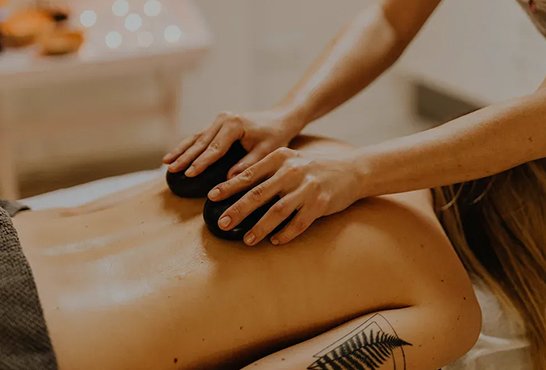
Short answer: Yes, for how you feel. Research shows massage can reduce perceived soreness and improve flexibility after exercise, though it does not directly boost strength or performance.
A 2020 systematic review and meta analysis in BMJ Open Sport & Exercise Medicine found that sports massage produced small improvements in flexibility and delayed onset muscle soreness, with no clear effect on strength or sprint performance. In practical terms, massage helps you feel less stiff and move more freely, which makes it easier to get back on the board.
For surfers, the most useful focus areas are usually:
- Upper back and shoulder blades
- Lats along the sides of the ribcage
- Neck and top of the shoulders
- Lower back and glutes
Our view from working with active clients: lighter to moderate pressure is usually the better choice during peak soreness, while deeper, more targeted work tends to feel best once the initial tenderness settles. Always tell your therapist that you surf and where you feel it.
Heat or ice after surfing?
Short answer: For general muscle soreness, gentle heat usually feels better because it relaxes tight muscles. Ice is more useful for a fresh injury with swelling.
San Diego water often runs cool for much of the year, so many surfers finish a session already chilled. A warm shower or heat pack on the upper back tends to feel more comfortable than more cold. If a joint is swollen or you felt a sudden sharp pain, that is a different situation and ice plus a professional opinion makes more sense.
Common Recovery Mistakes Surfers Make
Some habits make soreness worse or drag it out longer.
- Going out for a long session after months off. Your paddling fitness fades faster than your enthusiasm. Start with shorter sessions and build up.
- Skipping water because you were in the water. Being wet is not being hydrated.
- Stretching cold muscles hard right after a session. Warm up first, then stretch gently.
- Surfing through sharp shoulder pain. Repetitive paddling on an irritated shoulder is a common path to overuse injury.
- Ignoring your wetsuit fit. A suit that is too tight across the shoulders makes every stroke harder.
- Treating every ache as normal. Numbness, weakness or pain that keeps worsening needs an assessment.
How to Prevent Soreness Before Your Next Session
Recovery starts before you paddle out. A few habits make a real difference.
- Warm up on the sand for 5 minutes. Arm circles, band pull aparts, hip rotations and a few lunges wake up the muscles you are about to use.
- Build paddling endurance out of the water. Swimming, rowing and resistance band pull exercises all transfer well.
- Strengthen the back of your shoulder. External rotation band work supports the rotator cuff that paddling stresses.
- Choose the right board. More volume means less effort per stroke, which is why beginners at spots like Tourmaline Surfing Park and La Jolla Shores often start on longboards.
- Keep sessions reasonable on multi day trips. Visiting surfers tend to overdo it on day one and feel it for the rest of the trip.
Surf Recovery in Pacific Beach: What Local Surfers Deal With
Pacific Beach sits in the middle of some of San Diego’s most surfed coastline, from the breaks around Crystal Pier to Tourmaline in the north and Mission Beach to the south. A few local realities shape how surfers here feel after a session:
- Cooler water for much of the year means wetsuits most months, which adds some resistance through the shoulders.
- Beach break paddle outs can mean a lot of duck diving and repeated paddling through whitewater on bigger days.
- Surf trip crowds bring many visitors who surf several days in a row after weeks or months away from the water.
That combination is why shoulder, neck and upper back tension is so common among surfers in the area, both locals and visitors.
Key Takeaways
- Sore muscles after surfing mostly come from paddling, which fills about half of a typical session.
- The shoulders, lats, upper back and lower back take the most load.
- Normal soreness is delayed onset muscle soreness, peaking around 24 to 72 hours and improving each day.
- The best recovery basics are hydration, food, gentle stretching, sleep and light movement.
- Massage can ease soreness and improve flexibility, based on published research, but it does not replace medical care for an injury.
- Numbness, weakness, sharp pain or worsening symptoms are signs to see a doctor or physical therapist.
- Prevention comes down to warming up, building paddling fitness and easing back in after time off.
Frequently Asked Questions
How long does soreness last after surfing?
Normal muscle soreness after surfing usually begins within 12 to 24 hours, peaks around day two or three, and fades within about five days. If pain stays the same or gets worse after a week, or you notice weakness or numbness, it is worth having it checked by a medical professional.
Is it normal for my shoulders to hurt after surfing?
Yes, general shoulder and upper back soreness is very common because paddling works these muscles for most of a session. It is normal when the ache is dull, affects both sides and improves daily. Sharp pain, clicking with pain or trouble lifting your arm is not typical soreness.
Should I surf again if I am still sore?
Mild soreness is usually fine for a shorter, easier session, and gentle movement can even help. If you are very sore, your paddling form suffers and injury risk goes up. Take a rest day, stretch, and go back out when your shoulders feel loose again.
Why does my neck hurt after surfing?
Neck pain after surfing usually comes from holding your head up to look toward the horizon while paddling, combined with tight upper trapezius muscles. Try keeping your chin slightly tucked and lifting your chest through your upper back instead of cranking your neck upward.
What should I eat after surfing to recover?
Aim for a meal with protein and carbohydrates within a couple of hours of getting out of the water. Good options include eggs and toast, a chicken or fish rice bowl, Greek yogurt with fruit, or a turkey sandwich. Pair it with plenty of water to replace fluids lost to sun and salt.
Is massage good for surfers?
Massage is a useful recovery tool for surfers, especially for tight shoulders, lats and upper back. Research shows it can reduce perceived soreness and improve flexibility after exercise. It works best alongside hydration, sleep and stretching, and it should not replace medical care for a genuine injury.
Why do beginners get more sore than experienced surfers?
Beginners use muscles that are not yet conditioned for paddling, often paddle less efficiently, and tend to arch their lower back too hard. Experienced surfers have built paddling endurance over time. As your fitness and technique improve, the soreness after each session typically becomes much milder.
Does a wetsuit make paddling harder?
It can. Neoprene adds some resistance around the shoulders, and research from surf scientists has examined how wetsuits alter arm motion during paddling. A well fitted suit with flexible shoulder panels reduces this effect, so fit matters more than most surfers realize.
Conclusion
Feeling sore after surfing is a sign your body worked hard, especially your shoulders and back from all that paddling. Most of the time, water, food, gentle stretching, sleep and a little patience take care of it within a few days. Pay attention to the warning signs, ease back in after time away, and treat recovery as part of surfing rather than an afterthought.
If you are surfing around Pacific Beach and your shoulders, neck or back still feel tight after a session, a relaxing massage can help you loosen up and get back in the lineup feeling like yourself. Stop by Chill Spa at 1570 Garnet Ave, a short walk from the beach, or call (858) 308 5598 to book a time that works for you.