
Cupping therapy, also known as myofascial decompression, is a manual therapy technique that uses suction cups placed on the skin to create negative pressure. This negative pressure lifts the skin and the layer of connective tissue beneath it the fascia upward into the cup, decompressing the underlying muscle and allowing it to relax.
Unlike deep tissue massage, which uses compressive downward force to work into the muscle, cupping works in the opposite direction. The result is a distinctly different kind of release: one that separates fascial layers that may have fused together due to injury, overuse, or chronic tension, and floods previously stagnant tissue with fresh oxygenated blood.
The technique has roots in Traditional Chinese Medicine (TCM), where it has been used for thousands of years to move stagnation, support the body’s natural healing processes, and relieve pain. It also appears in ancient Egyptian, Middle Eastern, and Greek medical traditions.
Today, cupping is widely used in sports medicine, physical therapy, and integrative wellness practised at Chill Spa in Pacific Beach using medical-grade silicone cups and trained hands.
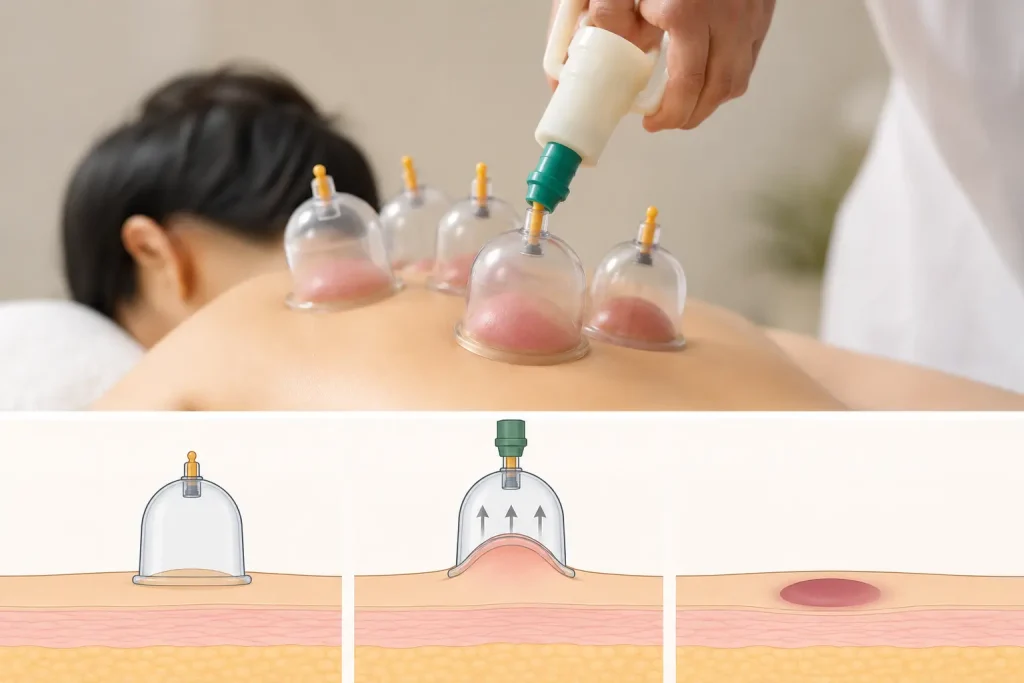
Both cupping therapy and massage therapy reduce tension and improve circulation — but they work through completely different mechanisms inside the body.
Massage compresses tissue downward while cupping lifts tissue upward to release deep fascia and restriction.
Cupping draws fresh blood flow into targeted tissue to support oxygen delivery and recovery.
Sustained suction helps calm the nervous system and encourages deep physical relaxation.
Combining cupping with massage can improve mobility, reduce pain, and enhance recovery results.
San Diego residents live active lives — surfing, running, hiking, gym training, and long desk hours. That physical and postural load accumulates in the soft tissue. Cupping therapy addresses it at a structural level, with benefits that extend well beyond a single session.
Cupping helps release deep tension in the neck, upper back, and shoulders caused by stress, posture, and repetitive movement.
Often used as a drug-free option for recurring pain, including back pain, neck pain, migraines, and myofascial tension.
Increased circulation supports faster muscle recovery, reduces soreness, and helps active individuals return to training sooner.
Dynamic cupping helps release fascial restriction and improve movement in the shoulders, hips, and thoracic spine.
Enhanced blood flow delivers nutrients to injured tissue, supporting healing in stubborn or slow-recovering areas.
Cupping activates the parasympathetic nervous system, helping calm the body and reduce physical stress patterns.
Applied to the upper back, cupping may improve chest expansion and help ease congestion during cold and flu season.
Muscle release and nervous system relaxation often lead to deeper, more restorative sleep after treatment.
Cupping is safe and effective for the vast majority of people, including those who have found conventional massage only partially helpful. It is particularly well-suited to anyone dealing with chronic tension, sports-related muscle fatigue, postural pain from desk work, or stress that has settled into the body physically.
However, cupping is not appropriate for everyone. It is not recommended in the following circumstances:
If you have any of the above conditions or are unsure whether cupping is appropriate for you, we encourage you to contact us before booking. Our therapists can discuss your situation and suggest the most appropriate treatment.
Clients visiting Chill Spa in Pacific Beach often ask about cupping therapy benefits, recovery time, cupping marks, sports recovery, and treatment frequency. Here are clear answers to the most common cupping therapy questions we hear.
The circular marks left after cupping therapy are not bruises. Traditional bruising happens from blunt-force trauma, while cupping marks occur because suction increases circulation and draws stagnant blood closer to the surface.
In Traditional Chinese Medicine, darker marks may indicate deeper muscular tension or stagnation. Marks usually fade within 3 to 7 days and are generally painless.
No. Professional cupping therapy should feel therapeutic and relaxing. Most clients feel a gentle pulling or lifting sensation as the cups create suction.
After a few minutes, this commonly changes into warmth, pressure relief, and deep muscular relaxation. Your therapist can always adjust the suction level.
A full cupping therapy session at Chill Spa typically lasts around 60 minutes, including consultation, treatment, and post-session review.
If cupping is added to massage therapy or sports massage, additional treatment time is included.
For acute tension or sports recovery, weekly sessions may help initially. As the body improves, many clients move to maintenance sessions once or twice monthly.
For stress relief and wellness support, monthly cupping therapy is common. Most therapists recommend waiting until previous marks fully fade before returning.
It’s best to avoid intense exercise for 24 hours after treatment. Cupping stimulates circulation, lymphatic drainage, and tissue recovery, so your body benefits from rest afterward.
Light walking is fine, but high-intensity training, cold plunges, and ocean swimming should wait.
Massage therapy uses downward compression into muscles, while cupping therapy creates upward suction that lifts tissue.
This decompression effect improves circulation, releases fascia, and helps create mobility in restricted muscle areas.
Yes. Athletes commonly use cupping therapy for recovery, mobility, and muscle performance support.
It may help reduce muscle soreness, improve circulation, and accelerate recovery after intense physical training.
Drink water before your session and avoid heavy meals immediately beforehand. Arrive with clean skin and avoid heavy lotions or oils.
Wear comfortable clothing and inform your therapist about any injuries, medications, or health concerns before treatment begins.